
Blessed Assurance
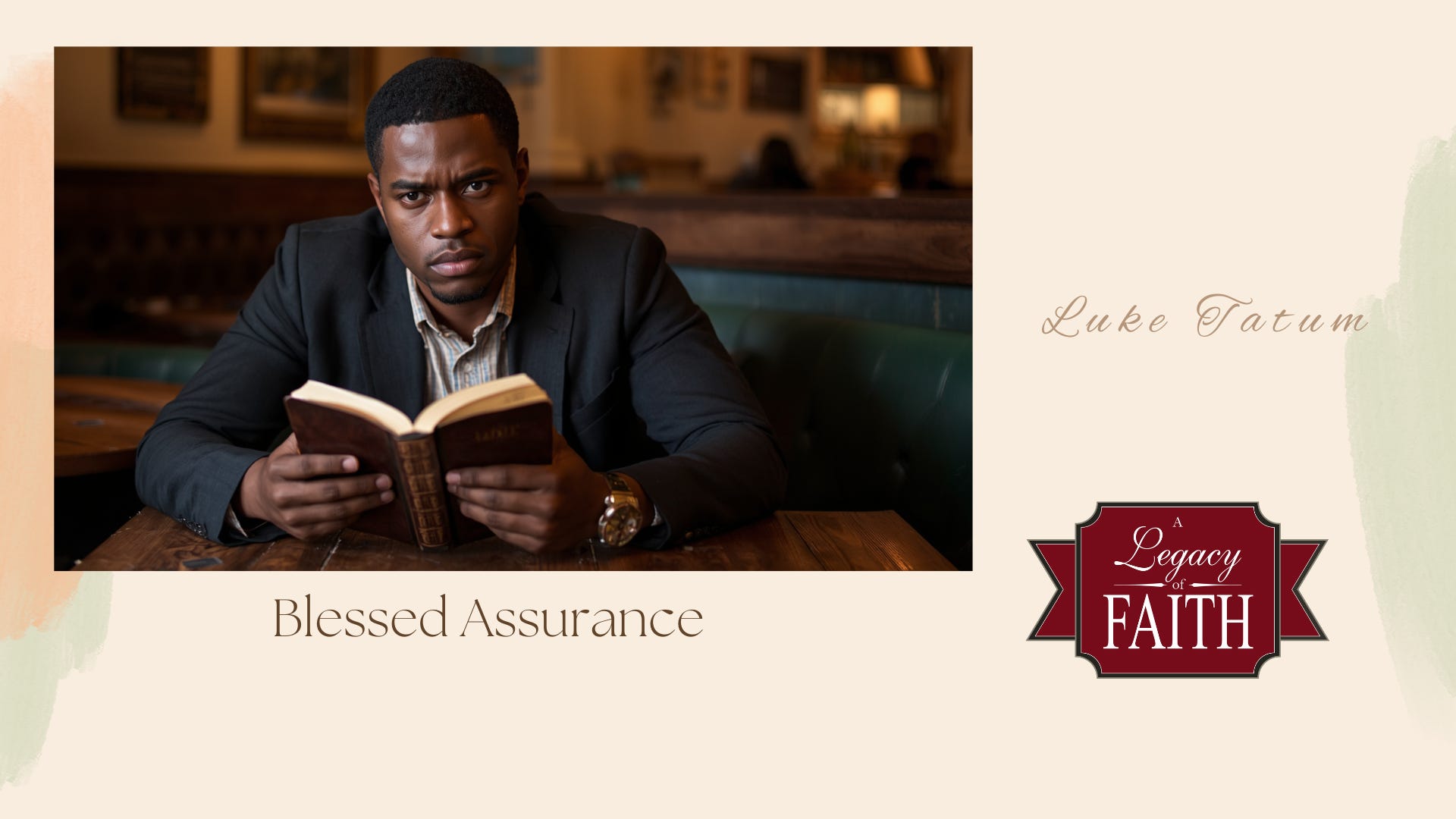
“How do I know if I am in Christ?”
This is perhaps the most common question that I have gotten in some form by people who outwardly proclaim themselves to be followers of Christ and members of His church. Actually, the way the question is usually phrased is something more like, “How do I know if I am saved?” I find it interesting that personal security, rather than the security of our divine relationship, is the concern that most often jumps out at us in our moments of doubt. Perhaps those of us who teach and/or shepherd need to do a better job of communicating the actual aims and outcomes of Christianity to people, including those who we often assume are “in Christ” and should already have them figured out.
In any case, the question is easily answerable from the pages of Scripture - actually, within one book of the New Testament specifically. Towards the end of his first letter to Christianity at large, the apostle John includes this purpose statement:
“I write these things to you who believe in the name of the Son of God, that you may know that you have eternal life.” ~ 1 John 5:13
In other words, the letter of 1 John was written specifically to Christians who were struggling with doubts about their relationship with Christ and status in the eyes of God, providing a standard to reassure those who were truly members of the faith and to challenge those who were not. It should be emphasized that John was writing to people who were ALREADY Christians, having followed the biblical model of becoming Christians (Ephesians 2:8-10, Acts 2:36-40) and receiving the Spirit’s guarantee of salvation (2 Corinthians 5:5). If you haven’t already done that, your journey towards blessed assurance begins there.
If you have, though, 1 John is written to reveal your “salvation status” to you. That being the case, what does John include as those points which should steady the faithful and challenge the faithless? To summarize the letter very briefly, there are three aspects that John spends most of this letter talking about:
1. The validity and trustworthiness of Christ’s Gospel, including His true presence as both God and man and His offering of grace to all who would believe in Him through His death and resurrection.
2. The necessity of walking in the light, choosing to love righteousness, hate sin, and allow such priorities to pull you closer to the goodness of God in Christ.
3. The universality of Christian love towards God and others, and the reality that one cannot love God OR others but must love God AND others in order to love either one properly.
These are the principles which the inspired apostle wants to make sure that Christians hold onto in order to maintain their spiritual security in Christ and the salvation He offers.
It is likely that this epistle, or this list of principles from the epistle, will cause one of two responses. The first sounds something like, “That sounds really easy, and much less based on specific requirements and behaviors than I would’ve thought.” You may notice the complete absence of what might be called “pet issues,” those secondary matters which we are so good at inflating and setting on the same pedestal as the Gospel itself, within the letter of 1 John. Secondary and tertiary matters of faith are definitely important, and part of developing spiritual maturity is forming biblically sound and defensible convictions about these things. At the same time, my convictions about things that Jesus Himself never directly addressed should not be as non-negotiable as the things that He spent His entire ministry teaching, and which John spends this entire letter reiterating. My identity as a Christian is dependent upon Christ’s perfect truth and faithfulness, not my own - and so is the Christianity of the person next to me, even when we disagree about secondary issues.
The second possible reaction sounds something like, “That sounds really hard; avoiding sin and loving God and people 100% of the time is exhausting and unrealistic.” That’s true - that’s why Jesus came. None of us are going to do anything that He asks us to do perfectly, even after years and years of practice. The grace of His Gospel is freedom from the chains of perfectionism and freedom unto a relationship with Him that fulfills the righteous requirement of God. This arrangement is not license to live however you want and put all the responsibility for your life and choices on Christ (see Romans 6), but it is an undeserved opportunity to live in tandem with Him and allow His sacrifice both to increase your capacity for godliness and make up the difference for your ungodliness. That sounds like a pretty good deal to me, and one into which I can put my faith just as I put my faith in Christ.
How do I know if I am in Christ? I recognize His Gospel of grace as my guiding light, and I do my best to follow Him more closely in that light, including an effort to love others as He loves me. Or, to borrow the language of the apostle Paul - I know I am in Christ because Christ lives in me.
“I have been crucified with Christ. It is no longer I who live, but Christ who lives in me. And the life I now live in the flesh I live by faith in the Son of God, who loved me and gave Himself for me.” ~ Galatians 2:20
AUTHOR: Luke Tatum